How to Choose the Right Rise Recliner Chair: 10 Expert Tips for Australian Buyers
21 May 2026
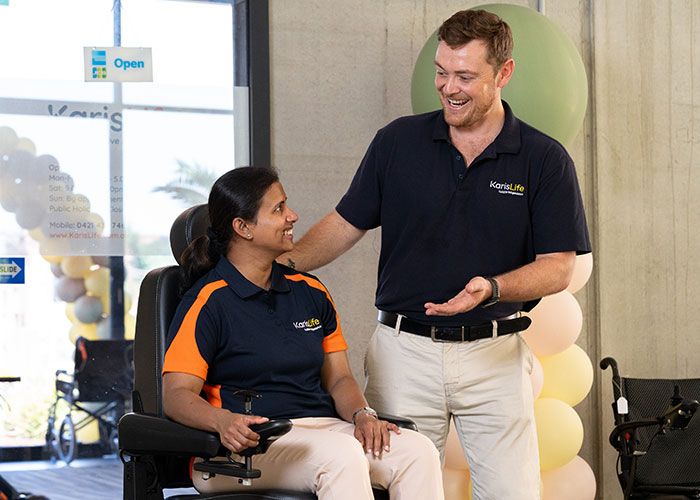
Choosing the right rise recliner chair — also called a lift chair recliner or electric lift chair — can make a profound difference to comfort, independence and safety at home. While many chairs look almost identical in the showroom, they vary dramatically in motor configuration, sizing, upholstery, frame strength and clinical suitability. Picking the wrong one is an expensive mistake — picking the right one can keep a loved one living confidently at home for years. This Australian buyer’s guide walks you through 10 tips the Karis Life clinical team uses every day to help retirees, NDIS participants and family carers select the most suitable rise recliner chair.
1. Start With Who the Chair Is For
The single most important question is: who will be using this rise recliner chair, and why? Rise recliners are especially beneficial for older Australians, people recovering from hip or knee surgery, individuals with arthritis, balance issues, MS, Parkinson’s or post-stroke weakness — and for the family carers who currently lift them. Once you understand the user’s primary need (sit-to-stand assistance, pressure care, sleep-in-chair, oedema management), the rest of the decision becomes much easier.
If you are buying for a person with significant clinical needs, involve an occupational therapist early. Karis Life works with prescribing OTs every day — see our dedicated occupational therapist support hub.
2. Get the Size and Fit Right (The #1 Reason Chairs Get Returned)
A rise recliner chair is only as good as its fit. A chair that is too large causes the user to slide forward and lose lumbar support. A chair that is too small puts pressure on the hips and back of the knees. As a general guide:
- Seat width — allow 25 mm clearance on each hip (47–55 cm for standard build, 60–75 cm for bariatric)
- Seat depth — two finger-widths between the back of the knee and the seat front
- Seat-to-floor height — feet flat on the floor, knees at ~90°, hips slightly higher than the knees
- Backrest height — supports the head and neck in full recline
- Armrest height — elbows resting comfortably at 90°
Always measure the user, not the chair the user already owns. Tall users (over 183 cm) and petite users (under 160 cm) should specifically ask for tall or petite ranges, which most quality brands now offer.
3. Choose the Right Motor Configuration
The number and arrangement of motors is the single biggest functional decision. Understanding the difference saves money and avoids disappointment.
Single Motor Rise Recliner Chairs
One motor controls the backrest and footrest together. Simple, reliable and the most affordable option. Best for users who only need basic sit-to-stand assistance and light reclining.
Dual Motor Rise Recliner Chairs
Two motors independently control the backrest and footrest, allowing the user to elevate the legs without leaning back — important after surgery, for circulation and for oedema management. The dual motor is the most commonly prescribed option under NDIS and Support at Home funding.
Quad / Multi-Motor (Tilt-in-Space) Rise Recliners
Four or more motors add independent adjustment of headrest, lumbar support and seat tilt-in-space. These are the clinical-grade chairs for users who need pressure care, postural support or extended sitting.
4. Match the Chair to the Carer, Not Just the User
A well-chosen recliner chair also protects the carer’s back. If a partner or family member is helping the user sit and stand multiple times a day, a powered lift function reduces lifting load by up to 80% — preventing carer injury, which is one of the most common reasons older Australians end up in residential aged care prematurely.
5. Pick the Right Fabric for the User’s Skin and Lifestyle
Upholstery is not just about aesthetics. It affects skin health, infection control and how long the chair will last. Common choices in the Australian market include:
- Fabric — warm and breathable, ideal for cooler homes and dry skin
- Leather and PU leather — durable, easy to wipe down, ideal for warmer climates
- Medical-grade vinyl — wipe-clean and fluid-resistant, used in aged care for infection control
- Antimicrobial coatings — recommended for users with continence concerns or compromised immunity
For users with sensitive skin, removable machine-washable covers can make day-to-day care much easier. For pressure-care users, pair the chair with a clinical cushion (see Tip 8).
6. Consider the Room (and the Wall Behind the Chair)
Many buyers forget to measure the room. A reclined rise recliner can extend 80–120 cm behind the upright position. If your lounge room is tight, ask specifically for a "wall hugger" or "zero-wall" rise recliner — it only needs 10–15 cm clearance behind because the chair glides forward as it reclines. Wall-hugger rise recliners are now widely available in single and dual motor versions in Australia.
7. Plan for Power Failures and Maintenance
A rise recliner is an electric appliance. Choose a model with an integrated battery backup so it can be lowered safely during a blackout. Also ask about warranty (3–5 years on the frame is the Australian standard), service network (does the supplier have technicians in your area?), and motor brand. Quality Australian rise recliners use German or Danish actuators (Linak, Okin) — these are quieter, last longer and are easier to service.
8. Pair With the Right Cushion for Pressure Care
For users with moderate-to-high pressure-injury risk, the chair alone is not enough. A separate pressure-care cushion — gel, memory foam, hybrid or air-cell — is almost always prescribed alongside the chair. Choose the cushion based on the user’s Braden or Waterlow risk score, not on price alone.
9. Don’t Overlook Bariatric Needs
Standard rise recliners typically support 130–160 kg. If the user weighs more than that, choose a purpose-built bariatric rise recliner with a reinforced steel frame, heavy-duty actuators (200–320 kg capacity), wider seat, deeper cushioning and stronger armrests for safe transfers. Never use a domestic recliner for a bariatric user — frame failure can cause serious injury.
10. Always Trial Before You Buy
No two bodies are the same. The only reliable way to choose a rise recliner chair is to sit in several models for at least 15 minutes each, with the recline cycled through every position. The right chair feels comfortable immediately and is fully usable on the first attempt — without instructions. This is why Karis Life encourages every customer to visit the Hornsby showroom or book an in-home trial before purchase.
Browse the full rise recliner range and seating category online, or visit our AT Assessment Clinic to trial single, dual and multi-motor models side-by-side.
Quick Reference: Rise Recliner Selection Checklist
- Identify the primary user need (sit-to-stand, pressure care, sleep-in-chair, postural support).
- Measure the user's height, weight, hip width, and leg length.
- Choose the motor configuration — single, dual or quad / multi-motor.
- Select fabric/leather/vinyl based on skin, climate and continence needs.
- Confirm room clearance — wall hugger design if space is tight.
- Check weight capacity — go bariatric if over 130 kg.
- Pair with a pressure-care cushion if the risk is moderate-to-high.
- Confirm warranty, service network and battery back-up.
- Trial the chair for at least 15 minutes.
- Confirm funding (NDIS, Support at Home, DVA, private).
Funding Your Rise Recliner Chair in Australia
A correctly prescribed rise recliner chair is recognised as Assistive Technology and is often partially or fully funded:
- NDIS — see the NDIS Assistive Technology framework. Karis Life is a registered NDIS provider — visit our NDIS participant hub.
- Support at Home — the new Support at Home program includes AT and Home Modifications funding. Read the Karis Life Support at Home funding guide.
- My Aged Care — Home Care Package funds via My Aged Care.
- DVA — Rehabilitation Appliances Program (RAP) with an OT prescription.
Trial a Rise Recliner Chair at Karis Life, Hornsby
With more than 40 years of supporting older Australians and NDIS participants, Karis Life (formerly Comfort Discovered) is a registered NDIS provider with a large, accessible Hornsby showroom. Try single, dual and multi-motor chairs side-by-side, or hire short-term while funding is approved. Talk to our case-manager support team or contact us on 1300 662 880 to book a trial.
Frequently Asked Questions — Choosing a Rise Recliner Chair
What is the most important feature when choosing a rise recliner chair?
Correct sizing is the most important, followed by motor configuration. A perfectly featured chair that does not fit the user’s body will never deliver comfort, posture or pressure care. Always measure the user before choosing the model.
Is a dual motor rise recliner worth the extra cost over a single motor?
For most older adults and post-surgery users, yes. A dual motor lift chair recliner lets you elevate the legs without reclining the back, which is important for circulation, oedema and recovery. Most occupational therapists prescribe dual motor as the default.
How much does a rise recliner chair cost in Australia?
Entry-level single motor rise recliner chairs typically start around AU$1,500. Dual motor models sit in the AU$2,000–3,500 range. Quad / multi-motor and bariatric clinical chairs can reach AU$4,500–6,000+. NDIS, Support at Home and DVA funding can cover all or part of the cost for eligible users.
Can I trial a Rise recliner before I buy it?
Yes. Karis Life encourages every customer to trial chairs at the Hornsby showroom, or to take a short-term rental while NDIS or Support at Home funding is being approved. This is the only reliable way to confirm comfort, fit and ease-of-use.
What is a wall-hugger rise recliner?
A wall hugger (also called a zero-wall) rise recliner is designed for tight rooms. As it reclines, the chair glides forward instead of tipping backwards, so it only needs 10–15 cm clearance behind, instead of the 80–120 cm a traditional recliner needs.

Keep abreast of the latest developments
Stay in the know about current offers, specials, discounts, and hot new product reviews by signing up for our newsletter.
Contact Us
Book a trial. Arrange a free consultation. Ask a question. Or learn more. Get in touch.
P: 1300 662 880
73 Jersey Street North
Hornsby NSW 2077
ABN 58 136 640 983
ACN 136 640 983
Opening Hours
Mon-Fri: 9.00am - 5.00pm
Sat: 9.00am - 4.00pm
Sun: By appointment
Public Holidays
We are closed on Monday, 8 June 2026, for the Kings Birthday.
Visiting Us?
Directions to our showroom are here >
© 2026 "Karis Life", "Assistive Independence" & "Comfort Discovered" are registered Trade Marks of Progalore Pty Ltd. ABN 58 136 640 983