What is a Rise Recliner Chair? A Practical Australian Buyer’s Guide
21 May 2026
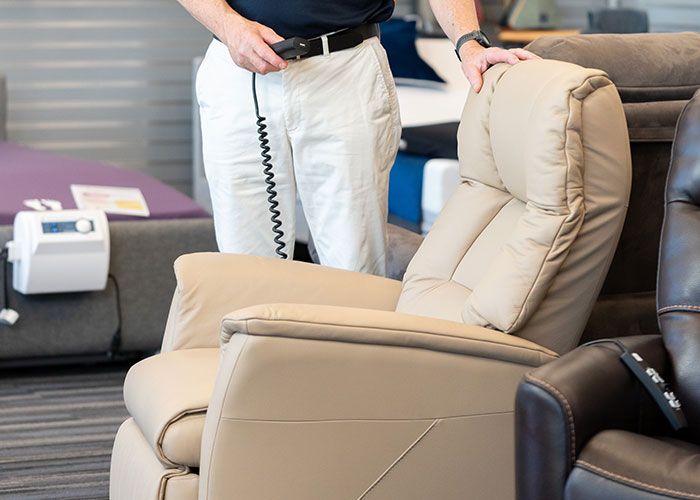
A rise recliner chair — sometimes called a lift chair, electric lift chair or riser recliner chair - is a power-assisted armchair designed to help a person sit down and stand up safely and comfortably. It looks like an everyday recliner, but a quiet electric motor tilts the seat forward and gently lifts the user toward standing, reducing strain on knees, hips and back. For older Australians, NDIS participants and people recovering from surgery, a rise recliner chair can be the single piece of assistive seating that protects independence and dignity at home. This guide explains how a rise recliner works, who benefits, the different motor types, what to look for, and how to access funding through the NDIS and Support at Home program in Australia.
What Is a Rise Recliner Chair?
A rise recliner chair is a specially engineered armchair that combines the comfort of a traditional recliner with a powered lifting mechanism. At the press of a handset button, the chair tilts forward and rises slowly, bringing the user almost to a standing position. The same handset reclines the backrest and elevates the footrest for resting, reading or sleeping. Unlike a standard recliner, a rise recliner chair is built around clinical safety — the lift is controlled, the frame is reinforced, and the upholstery is chosen for long-wear and skin comfort.
In Australia, rise recliner chairs are widely used in private homes, retirement villages, aged-care facilities and disability supported-living settings. They are recognised as an item of Assistive Technology (AT) and can be funded through the NDIS, the Support at Home program and Department of Veterans’ Affairs (DVA) packages when supplied by a registered provider such as Karis Life.
How Does a Rise Recliner Chair Work?
A rise recliner chair operates on a small but powerful electric actuator (motor) that drives a steel scissor-lift mechanism beneath the seat. Pressing the “rise” button slowly tilts the chair forward — typically to about 45 degrees — and lifts the user upward and slightly forward. The geometry is designed so the user’s feet stay flat on the floor, and the chair does the work that aching knees and hips would normally do.
The same handset controls recline. A single motor chair moves the back and footrest together. Dual and multi-motor chairs move them independently, which is important if an occupational therapist has prescribed a specific seated angle for pressure care, oedema management or breathing comfort. Most quality models have a battery backup so the chair can be lowered safely during a power outage.
Who Benefits From a Rise Recliner Chair?
A lift recliner chair is suitable for a wide range of Australians who find it difficult, painful or unsafe to stand up from a regular chair. Typical users include:
- Older adults experiencing reduced mobility, balance issues or general frailty
- People recovering from hip, knee or back surgery who need a controlled seat-to-stand action
- Individuals living with arthritis or chronic joint pain — see our companion guide on managing arthritis at home
- NDIS participants with neurological conditions, MS, Parkinson’s or post-stroke weakness
- Family carers looking to reduce the lifting load and lower the risk of falls
- Bariatric users who need reinforced framing and wider seat dimensions
Occupational therapists frequently prescribe a rise recliner chair as part of a broader plan to delay the move into residential care. Karis Life works closely with OTs through our dedicated occupational therapist support program and AT Assessment Clinic.
Types of Rise Recliner Chairs (Motor Configurations)
Choosing the right motor configuration is the single biggest decision when buying a rise recliner chair. The three main options are:
1. Single Motor Rise Recliner Chairs
A single motor rise recliner moves the backrest and footrest together with one action. They are simple, reliable and cost-effective. Best suited to users who want straightforward sit-stand assistance and basic reclining for comfort.
2. Dual Motor Rise Recliner Chairs
A dual motor rise recliner has two independent motors — one for the backrest, one for the footrest. The user can elevate the legs without leaning back, which is important for circulation, oedema and post-surgery recovery. Dual motor chairs are the most commonly prescribed option under NDIS and Support at Home funding.
3. Multi-Motor (Tilt-in-Space) Rise Recliner Chairs
Multi-motor rise recliners add separate adjustment for headrest, lumbar support and seat tilt-in-space. This is the clinical-grade option for users who need pressure care, postural support or extended sitting time. Multi-motor models are often paired with high-density foam or memory-foam cushions for skin integrity.
Key Features to Look For in a Lift Recliner Chair
Modern rise recliner chairs sold in Australia include a wide range of comfort and clinical features. The right combination depends on the user’s height, weight, condition and home environment:
- Smooth, quiet lift mechanism with a slow-stop action
- Independent footrest and backrest control (dual or multi-motor)
- Battery backup so the chair lowers safely during a blackout
- Wall-hugger / zero-wall design that needs only 10–15 cm clearance behind
- Heat and massage zones for lower-back and lumbar comfort
- USB charging port built into the handset
- Removable, machine-washable arm covers and headrest covers
- Flame-retardant Australian-standard upholstery (AS/NZS 3744)
- Weight capacity rating — standard models support 130–160 kg; bariatric models 200–250+ kg
Sizing and Materials — Getting the Fit Right
A rise recliner chair only works well if it is sized to the user. Seat depth that is too long causes the user to slide forward; a seat that is too narrow restricts circulation. As a general guide, an occupational therapist will measure:
- Seat width — usually 47–55 cm for standard builds, 60–75 cm for bariatric users
- Seat depth — should support the thighs without pressing into the back of the knees
- Seat-to-floor height — feet should rest flat on the floor with knees at ~90°
- Backrest height — must support the head and neck in the reclined position
Upholstery options at Karis Life include soft fabric (warm, breathable), leather and PU leather (durable and easy to wipe down), and medical-grade vinyl (used in care facilities for infection control). Many ranges also offer a choice of neutral colours, so the chair blends into a lounge room rather than looking like a clinical appliance.
Browse the full range of rise recliners, bariatric chairs and pressure-care cushions in the Karis Life online showroom — or visit our Hornsby store to try before you buy.
NDIS, Support at Home & Aged Care Funding for Rise Recliner Chairs
A rise recliner chair is classified as Assistive Technology (AT) and is frequently funded through Australian government programs. Karis Life is a registered NDIS provider and can guide families, OTs and case managers through the process.
NDIS — under the NDIS Assistive Technology framework, a rise recliner is typically a low to mid-cost AT item. An occupational therapist assessment and quotes are usually required.
Support at Home (formerly Home Care Packages) — from 1 July 2025, the new Support at Home program includes an Assistive Technology and Home Modifications scheme. Read the Karis Life funding guide for the current funding tiers and steps.
My Aged Care — older Australians on a Home Care Package can use package funds to purchase a rise recliner. Eligibility is assessed via My Aged Care.
DVA—eligible veterans can access a rise recliner chair through the RAP (Rehabilitation Appliances Program) with an OT prescription.
How to Choose the Right Rise Recliner Chair
With dozens of models on the Australian market, choosing the right chair is genuinely confusing. The five-step process used by the Karis Life clinical team is:
- Identify the primary need — sit-to-stand assistance, pressure care, sleep-in-chair or postural support.
- Match the motor configuration — single, dual or multi-motor (see above).
- Measure the user's height, weight, hip width and condition-specific needs.
- Trial the chair — sitting in the chair for at least 15 minutes is the only reliable way to assess comfort.
- Confirm funding — through the NDIS, aged care package or private purchase.
Try a Rise Recliner Chair at Karis Life, Hornsby
A rise recliner chair is more than a piece of furniture — it is a clinically prescribed mobility solution that supports independence, reduces falls and lightens the load on family carers. Choosing the right one is much easier when you can actually sit in it. Karis Life (formerly Comfort Discovered) has been helping Australians for over 40 years from our Hornsby, Sydney showroom. We stock a broad range of single, dual and multi-motor rise recliners from trusted Australian brands, and our experienced team will help you select, trial and install the right chair for your home.
Book a no-obligation trial at our AT Assessment Clinic, explore our rental options, or contact us on 1300 662 880. Occupational therapists and case managers can also visit our dedicated OT support hub for clinical specifications and trial bookings.
Frequently Asked Questions About Rise Recliner Chairs
What is the difference between a rise recliner chair and a regular recliner?
A regular recliner only tilts back. A rise recliner chair both reclines and tilts forward to gently lift the user toward standing. It also has a clinical-grade frame, slow-stop motor and battery backup — features that a domestic recliner does not include.
Is a rise recliner chair covered by NDIS in Australia?
Yes. A rise recliner is generally classified as low or mid-cost Assistive Technology under the NDIS. An occupational therapist assessment and supplier quotes are usually required. Karis Life is a registered NDIS provider and supplies, delivers, and installs rise recliner chairs across Sydney and NSW.
Single motor or dual motor — which rise recliner is best?
A single motor rise recliner is cheaper and easier to use. A dual motor model lets you raise your feet without leaning back, which is important after surgery or for circulation. Most OTs prescribe a dual motor lift chair recliner as the default for older adults.
How much does a rise recliner chair cost in Australia?
Rise recliner chairs in Australia typically range from around AU$1,500 for an entry-level single motor model to AU$5,000+ for a multi-motor, bariatric or tilt-in-space clinical chair. NDIS, Support at Home and DVA funding can cover all or part of the cost for eligible users.
Can I rent or trial a Rise recliner before buying?
Yes. Karis Life offers a try-before-you-buy service at the Hornsby showroom and a short-term rental program for post-surgery recovery. This is also a good option while NDIS or Support at Home funding is being approved.

Keep abreast of the latest developments
Stay in the know about current offers, specials, discounts, and hot new product reviews by signing up for our newsletter.
Contact Us
Book a trial. Arrange a free consultation. Ask a question. Or learn more. Get in touch.
P: 1300 662 880
73 Jersey Street North
Hornsby NSW 2077
ABN 58 136 640 983
ACN 136 640 983
Opening Hours
Mon-Fri: 9.00am - 5.00pm
Sat: 9.00am - 4.00pm
Sun: By appointment
Public Holidays
We are closed on Monday, 8 June 2026, for the Kings Birthday.
Visiting Us?
Directions to our showroom are here >
© 2026 "Karis Life", "Assistive Independence" & "Comfort Discovered" are registered Trade Marks of Progalore Pty Ltd. ABN 58 136 640 983